How kids' GPS trackers work, which format suits a pupil or a teenager, and why you should use the tracker openly.
A GPS tracker for kids shows parents where their child is on a map on their phone, and an SOS button lets the child call for help with one press. A young pupil is best served by a watch or key fob with SOS and geofences; a teenager by a small mini tracker. Use the tracker openly: your child should know why they have it and how to use it.
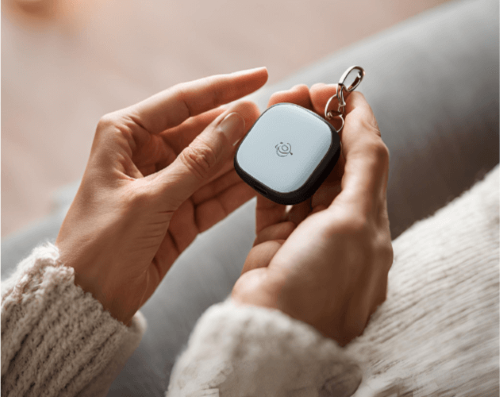
How does a GPS tracker for kids work
- The tracker gets a position from satellite signals. Outdoors the error is usually a few metres; inside a school or a shopping centre it is larger.
- It sends it over mobile data to a server, which is why it has a SIM card.
- You see the location on a map in the app: where your child is now, which way they walked home from school, and whether they pressed SOS.
The most useful features for parents are the SOS button, geofences (an alert when the child leaves the yard, school or club) and calls to a few preset numbers.
Types of GPS trackers for children
| Format | Best for | Pros | Watch out for |
|---|---|---|---|
| Watch | Kids aged 6–10 | Always on the wrist, can make calls | Needs charging every day or two |
| Key fob or pendant | Young pupils | Light, clips onto a backpack or keys | The backpack can be forgotten or lost |
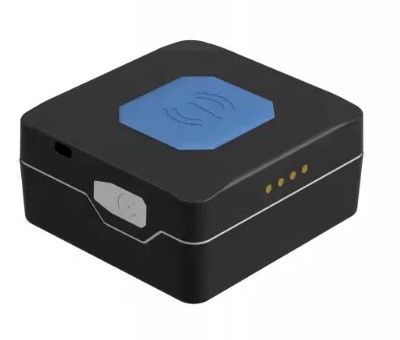
| Mini tracker | Teenagers | Discreet, longer battery life | Usually no calls |
| Tracker with voice calls | Any age | The child can call parents without a phone | Larger in size |
Small models for older kids are in our mini GPS trackers section. Key fobs and pendants with an SOS button are under personal GPS trackers.
How to choose a GPS tracker for your child
- Age.A first-grader needs a big, clear SOS button and a way to call mum. A teenager is unlikely to wear a bright watch, so a discreet tracker works better.
- Battery life.If the tracker needs charging every evening, sooner or later someone will forget. The longer it lasts, the more reliable it is.
- Geofences and alerts.Add home, school and the sports club, and get a message when your child arrives or leaves.
- A simple app.You should be able to open the map and see your child in seconds, without digging through menus.
Can a smartphone do the job
If your child has a smartphone, you can see their location through family features such as Google Family Link or Find My on iPhone. For a teenager that is often enough. But a young pupil may not have a phone, and phones run flat, get lost or sit silent in a backpack. A tracker is simpler: one SOS button, longer battery life and no games. Many parents combine both: a tracker for a first-grader, a smartphone with location sharing for a teenager.
Tracking your child and the law
As legal representatives, parents may use a tracker for their own minor child. But there are limits worth keeping in mind.
- Do not turn on listening. Some trackers can switch the microphone on secretly. That records teachers, other children and adults without their consent, which is a criminal breach of privacy in Ukraine (Articles 163, 182 and 359 of the Criminal Code).
- Track only your own child. Tracking other people's children or adults without consent is prohibited.
- Be open with your child. Especially with a teenager. Secret tracking destroys trust, and once it is discovered the tracker simply ends up in a drawer.
Practical tips
- Check the battery every morning until it becomes a habit.
- Walk the route to school together and show how to press SOS. Practise at home.
- Explain that SOS is for real danger: being lost, someone bothering them, feeling unwell.
- Save 2–3 numbers in the tracker: mum, dad, grandma.
- Update geofences and contacts when the schedule changes: a new club, a different school, a summer at grandma's.
FAQ
At what age does a child need a GPS tracker?
Most parents buy one when the child starts walking to school or clubs alone, usually at 6–8 years old. Before that it is mainly useful for trips to crowded places. For a teenager a tracker makes sense if you have agreed on the rules together and they understand why it is there.
Does a kids' GPS tracker need a SIM card?
Yes, without a SIM card with mobile data the tracker cannot send coordinates and you will not see your child on the map. If the tracker supports calls, the plan should include minutes too. Choose the operator with the strongest coverage in your area and along the route to school.
Can I listen to what is happening around my child?
No, we advise against switching on secret ambient listening. It records teachers, classmates and other adults without their consent, which breaks the law. To stay in touch with your child, use an ordinary call through the tracker or a phone your child knows about, and agree on when they should answer.
What if my child does not answer and the tracker shows an unfamiliar place?
First call your child and the people they were supposed to be with: the teacher, the coach, friends' parents. Look at the route in the app to see how they got there. If you still cannot reach anyone and the place looks unsafe, call the police on 102 and give them the coordinates.
Read also: How a personal GPS tracker works
GPSka · turnkey fleet tracking
SOS tracker for your child
Tracker, SIM card, setup and dashboard. Navi.zone from $9.90 per vehicle per year, Wialon from 195 UAH per month.