How a personal GPS tracker sends its location to your phone, who needs one and how to use it legally, with consent.
A personal GPS tracker works out its position from satellite signals and sends it over mobile data to a server. You see the location on a map in an app or web dashboard, and you get an alert if the person presses the SOS button or leaves a set zone. Use one only for yourself, your own child, or someone who has agreed to be tracked.
What is a personal GPS tracker
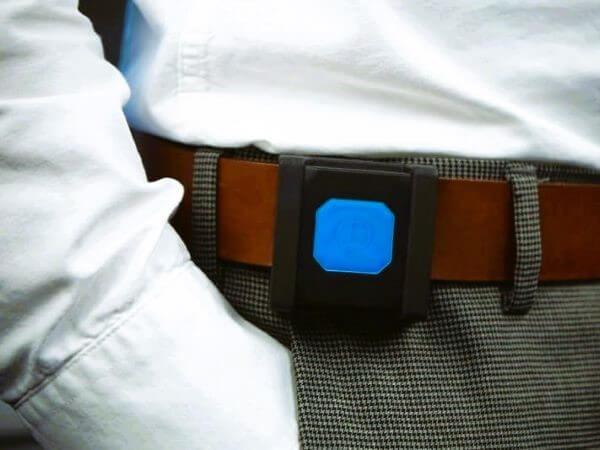
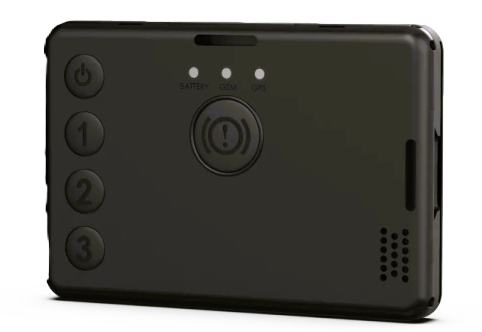
It is a small device about the size of a key fob or a matchbox. People carry it in a pocket, on a lanyard, on a belt or on a wristband. Inside there are three main parts:
- A GNSS modulereceives GPS signals, and in many models also Galileo, BeiDou or GLONASS, and calculates the coordinates.
- A cellular module with a SIM cardsends the coordinates over the mobile network to a tracking server.
- A batterydecides how long the tracker runs between charges. That depends on the model and on how often it reports its position.
How does a GPS tracker for a person work: 3 steps
- It gets a fix. The tracker picks up several satellites and calculates where it is. Outdoors the error is usually a few metres; indoors or between tall buildings it grows.
- It sends the data. Coordinates go to the server over mobile data at a set interval. For example, once a minute while the person is moving and less often when they are still, to save battery.
- It shows the location on a map. In the app or in a tracking platform such as Wialon or Navi.zone you see the current position, the day's route and every alert.
Typical features
- SOS button. One press sends an alarm with coordinates to preset numbers or to the dashboard. See our range of GPS trackers with an SOS button.
- Geofences. You draw the school, home or work site on the map and get a notification when the person leaves it.
- Fall detection. Some models raise an alarm on their own after a fall or a long period without movement. That matters for elderly people and for staff in hazardous areas.
- Calls to preset numbers. Some trackers let the wearer talk to family or a dispatcher without a phone.
Who needs a GPS tracker
Children
A young pupil who does not know the city well can call their parents with one press of SOS. With a teenager it is better to be open: explain why the tracker is there and agree together when it is switched on.
Elderly people
If your father or grandmother has memory problems, a tracker helps you find them quickly when they get lost. Choose a model with a large SOS button, fall detection and a long-lasting battery. Make the decision together with the person, or with their legal guardian if a court has found them incapable.
Hikers and runners
On a hike or a long run the tracker records the route and your family can see where you are. If you twist an ankle in the woods, the SOS button sends your exact coordinates.
Employees
A night security guard, a technician working at height, a power-line inspector: for jobs like these a personal tracker improves safety. Employees must be informed about the tracker in writing, and tracking should be limited to working hours. If crews travel in company vehicles, it is easier to fit the tracker in the van; see how field crew tracking works.
What the law says: openly and with consent only
The tracker itself is a legal device. But tracking another person without their knowledge is prohibited in Ukraine. Secretly collecting information about someone's private life, violating the privacy of correspondence and phone calls, and illegally using covert surveillance equipment are criminal offences under Articles 182, 163 and 359 of the Criminal Code of Ukraine.
- Track yourself, your own minor child, or a person who has given consent.
- For employees: written notice or consent, working hours only, company device only.
- Do not turn on ambient listening: recording other people's conversations without their consent is illegal.
- Never hide a tracker in someone else's belongings or car.
How to choose a personal GPS tracker
| Who it is for | What matters | Practical format |
|---|---|---|
| Young child | SOS, geofences, calls to parents | Watch or key fob |
| Teenager | Small size, battery life | Mini tracker |
| Elderly person | Large SOS button, fall detection | Fob on a lanyard |
| Employee | Rugged case, SOS, works with a tracking platform | Professional personal tracker |
Then check three things. First, battery life: the less often you charge it, the lower the chance it dies when you need it. Second, indoor positioning: it helps if the tracker can use Wi-Fi and cell towers. Third, compatibility with a tracking platform, so you see all people and vehicles in one dashboard. For work use, a common choice is the Teltonika TMT250 personal tracker with an SOS button.
FAQ
Does a personal tracker need a SIM card?
Yes, without a SIM card with mobile data the tracker cannot send its coordinates to the server. It can only store the route in memory, so you will not see where the person is right now. Pick a plan with a small data allowance and good coverage where the person spends most time.
How accurate is a personal GPS tracker?
Outdoors the error is usually a few metres. Inside buildings, in the metro and between tall blocks the satellite signal weakens and accuracy drops. Some models then switch to Wi-Fi or cell-tower positioning, where the error can reach hundreds of metres. For finding a person that is usually enough.
Can I track an adult without them knowing?
No, secretly tracking an adult without their consent is a criminal offence in Ukraine. Liability is set out in Articles 163, 182 and 359 of the Criminal Code. Use the tracker openly: explain why it is needed and get consent, and for employees give written notice before you start.
How long does the battery last?
It depends on battery capacity and on how often the tracker sends its position. If it reports every minute, the charge runs out faster. A longer interval and a sleep mode while the person is still extend battery life noticeably. Check the exact figures in the specifications of the particular model.
Read also: GPS trackers for kids: how to keep them safe
GPSka · turnkey fleet tracking
SOS tracker for your family or your team
Tracker, SIM card, setup and dashboard. Navi.zone from $9.90 per vehicle per year, Wialon from 195 UAH per month.