How to test factory and capacitive fuel level sensors, where they sit, how to connect one to a GPS tracker and when to recalibrate.
To check a fuel level sensor, first work out which type you have: the factory float sender that drives the fuel gauge, or a capacitive fuel level sensor for GPS fleet tracking. A factory sender is checked by watching the gauge while refuelling, with an OBD-II scanner and with a multimeter. A capacitive sensor is checked against the fuel graph in the tracking software and with a test fill of a known volume.
Types of fuel level sensors
- Factory float sender. A float on an arm moves a resistor wiper: the level changes, the resistance changes, the needle moves. Good enough for the driver, but not accurate enough for fuel accounting.
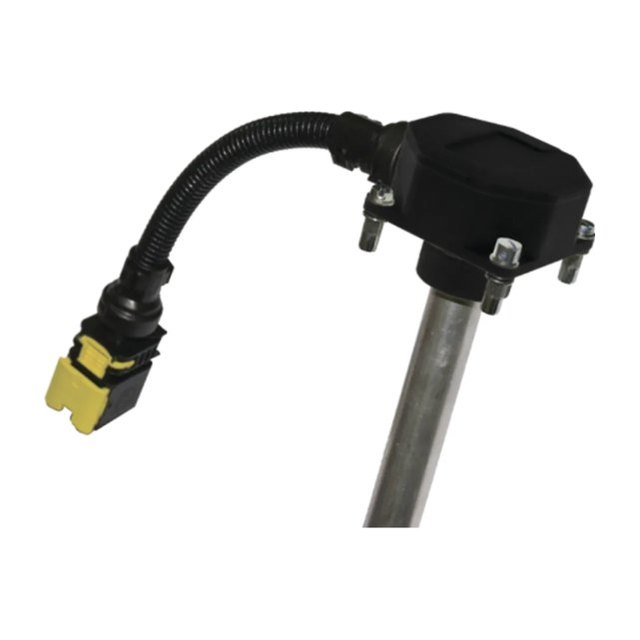
- Capacitive sensor. A probe tube runs the full height of the tank, and the fuel level changes its electrical capacitance. Data goes to the GPS tracker over a digital interface (RS-485, RS-232) or an analogue output. These sensors are fitted to trucks, tractors and vans to see refuels and fuel theft.
- CAN bus data. The tracker reads the level from the factory sender over the vehicle network. No extra sensor is needed, but the accuracy is the same as the factory sender.
| Type | How it measures | Accuracy | How to check it |
|---|---|---|---|
| Factory float sender | Resistor value | Enough for the driver | Gauge, OBD-II, multimeter |
| Capacitive tracking sensor | Probe capacitance | High after calibration | Graph in the dashboard, test fill |
| Level from CAN bus | Factory sender data | Same as factory sender | Compare with the gauge and refuels |
Where is the fuel level sensor located
The factory sender sits inside the tank, often in one module with the fuel pump. On passenger cars you usually reach it through a hatch under the rear seat; on some models the tank has to come off.
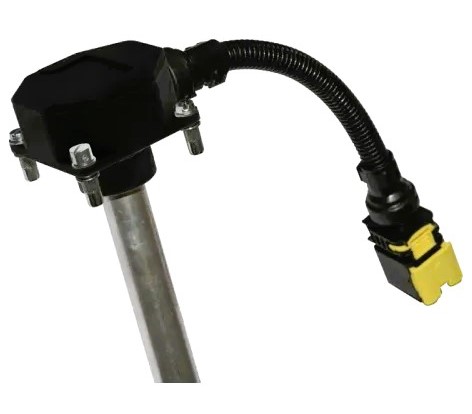
A capacitive sensor is mounted through a hole in the top of the tank. On a truck it is easy to spot: you can see the sensor head with its cable and seal on top of the tank.
How to test a factory fuel level sensor
- Gauge while refuelling. Add a known volume and watch the gauge. If the needle does not move or jumps around, the fault is in the sender, the wiring or the instrument cluster.
- OBD-II scanner. Connect a scanner and look for fuel level sensor circuit codes (usually P0460–P0464) and live fuel level data.
- Multimeter. Measure resistance at the module connector with the float in different positions. It should change smoothly, without dropouts or jumps. Look up the empty and full values in your car’s service manual, as they differ between manufacturers.
- Connectors and ground. A corroded connector or a poor ground is a common reason for a “lying” gauge even when the sender itself is fine.
Before working on the fuel tank, disconnect the battery, work in a ventilated area and keep away from open flames.
How to check a capacitive fuel level sensor in the tracking system
- Fuel graph. Open the fuel graph in Wialon or Navi.zone. When parked the line should be flat; small fluctuations while driving are normal. Sudden drops to zero usually mean a power or connection fault with the tracker.
- Test fill. Add a known volume according to the fuel station receipt and compare it with what the system recorded. A noticeable difference means the calibration needs checking.
- Calibration table. Make sure it is loaded and matches this particular tank. After replacing the tank or the sensor, the calibration is done again.
- Power, interface, seals. Check the voltage at the sensor, the connector and the port settings in the tracker. A broken seal is a reason to check whether someone has tampered with the sensor.
How to connect a fuel level sensor to a GPS tracker
- Disconnect the battery.
- Match the probe length to the tank height and trim it if necessary, following the manufacturer’s instructions.
- Drill a hole in the top of the tank and fit the sensor with its gasket.
- Run the cable to the tracker and connect power and the interface (RS-485, RS-232 or analogue input).
- Configure the tracker and the tracking software.
- Calibrate the tank: fill it in portions and record the readings.
- Seal the sensor and connectors.
Calibration and sealing take experience, so it is better left to professionals. You can book it on our GPS equipment installation page.
What a fuel monitoring system consists of
- Fuel level sensorshows how much fuel is in the tank.
- Fuel flow meteroptional, measures how much fuel has passed through the engine.
- GPS trackercollects sensor data and sends it to the server.
- Tracking softwarebuilds graphs and refuel and drain reports, and sends alerts.
Together they help you spot fuel drained from a parked truck, a refuel that only exists on paper, or overconsumption from idling. See how it is set up for trucks and farm machinery on our fleet fuel monitoring page.
Where to buy a fuel level sensor
GPSka stocks BI FLSENSOR capacitive sensors in 700, 1500 and 3000 versions for different tank heights, plus a ready-made fuel monitoring kit with a tracker. Before buying, check the tank height and that the sensor is compatible with your tracker. All models are in the fuel level sensors section.
FAQ
Why does my fuel gauge show the wrong level?
The most common causes are a worn resistor track, a corroded connector or a poor ground connection. Less often the float sticks or the instrument cluster itself is faulty. Start simple: read the codes with an OBD-II scanner, then check the connector and ground, and only then remove the module from the tank to measure resistance.
Can I check a fuel level sensor without removing it from the tank?
Yes, partly. A factory sender can be checked with an OBD-II scanner and a multimeter at the connector without removing the module. A capacitive sensor is checked against the graph in the tracking software and with a test fill. You only need to remove it if you suspect physical damage, a dirty probe or a sticking float.
How often does a capacitive sensor need calibrating?
Recalibration is needed after replacing the tank or the sensor, after tank repairs, or if a test fill differs noticeably from the system data. Otherwise the sensor keeps working with its existing table. As a routine check, do a test fill of a known volume a few times a year and compare it with the graph.
Do I need a separate sensor if the tracker reads the CAN bus?
Not always. The CAN bus gives you the level from the factory sender, which is often enough for a car or a van. If you need to see small fuel drains on a truck or a tractor, fit a capacitive sensor: once calibrated, it shows level changes more precisely than the factory sender.
Read also: the difference between a fuel level sensor and a fuel flow meter
GPSka · turnkey fleet tracking
See every refuel and fuel drain in your dashboard
Tracker, SIM card, setup and dashboard. Navi.zone from $9.90 per vehicle per year, Wialon from 195 UAH per month.