A GPS tracker needs a SIM card with mobile data, SMS and solid coverage. We explain M2M, data plans, operators and roaming.
A GPS tracker needs a SIM card with mobile data, SMS and solid coverage wherever your vehicles go. It does not need call minutes or a big data bundle. For a single car, a regular low-cost SIM is fine. For a fleet or cross-border trips, an M2M SIM is the better choice: you manage it from the operator’s portal, and it often works across several networks.
Below: how M2M differs from a regular SIM, how much data a tracker uses, how to pick an operator and whether prepaid or contract makes more sense.
Which SIM card for a GPS tracker: M2M or regular
M2M (machine-to-machine) means SIM cards and plans built for devices rather than people: trackers, payment terminals, smart meters. With one or two cars the difference is small. With 15 delivery vans it becomes very noticeable.
| Feature | Regular SIM | M2M SIM |
|---|---|---|
| Plan | Minutes, SMS, gigabytes for a smartphone | Small data bundles for devices |
| Management | From a phone, USSD codes | Operator portal or M2M platform |
| Roaming | Per plan terms, often expensive | Often multi-network access |
| Form factor | Standard plastic card | Industrial cards with extended temperature range available |
| Best for | Owner of 1–2 cars | Fleets, hauliers, heavy machinery |
How much data does a GPS tracker use
A tracker sends short packets: coordinates, speed, ignition status and sensor readings. The volume depends on the reporting interval, the number of sensors and mileage. It is usually tens of megabytes per vehicle per month, so there is no point paying for a 10 GB bundle.
What the SIM plan for a tracker should include:
- Mobile data: required, it is how the tracker sends data.
- SMS: recommended, for sending commands to the tracker or receiving alarms.
- Calls: only for trackers with voice, such as GPS trackers with an SOS button.
On prepaid plans the number may be deactivated if it is not topped up for a long time. Check the operator’s terms in advance so your tracker does not go silent for six months.
How to choose a mobile operator for a GPS tracker
- Coverage on your routes. Check the coverage map and test the SIM in a real vehicle. A tractor in a field and a minibus in the city are very different conditions.
- Business M2M plans. Major operators have separate offers for devices. They pay off when you have many cards.
- Roaming. EU trips need a SIM that works abroad without bill shock. For transport to Poland it also affects data delivery to the SENT and e-TOLL systems.
- Multi-network SIMs switch to another network when the main one is unavailable. This improves reliability in remote areas, although no SIM gives coverage literally everywhere.
Prepaid or contract
Prepaid is the easiest start. The downside is that you have to watch the balance manually. The card sits inside a tracker behind the dashboard, so you cannot just check it from your phone. When the money runs out, the tracker goes quiet.
Contract means the company gets one invoice and all cards are visible in the operator’s portal. You can top up, change plans or block a SIM there. With more than 5–10 vehicles, a contract usually saves time for your accountant and dispatcher.
Why the right SIM card matters
- Complete data.Every connection drop is a gap in the track and an inaccurate mileage or fuel report.
- Predictable costs.You pay for the data you actually need, not for a smartphone bundle.
- Less manual work.Cards visible in one portal are far easier to manage than twenty prepaid numbers.
Checklist before you buy
- Mobile data and SMS included, no unnecessary minutes or gigabytes.
- Coverage tested on your routes.
- Roaming enabled if vehicles travel abroad.
- SIM PIN disabled, otherwise the tracker cannot use the card.
- Clear responsibility for topping up the balance.
Ready-made kits with a SIM card
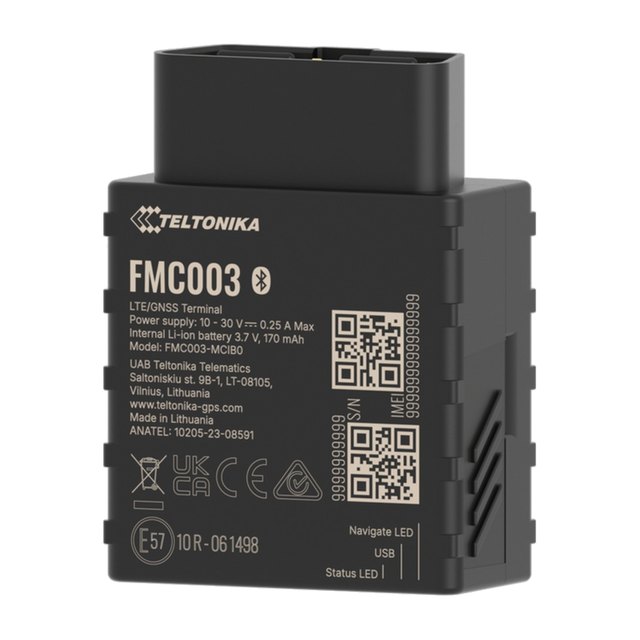
If you would rather not pick an operator and plan yourself, take a ready-made tracking kit: tracker, SIM card and a configured dashboard. For example, the Teltonika FMP100 kit with SIM card and Navi.zone plugs into the cigarette lighter socket and needs no installation. If you already have a tracker, we can help with tracker configuration.
FAQ
Can I use a regular smartphone SIM card in a tracker?
Yes, for one or two cars it works fine. Disable the SIM PIN, make sure the plan includes mobile data and SMS, and keep an eye on the balance. For a fleet, M2M or contract cards are more convenient because you see them all in one portal and do not top up each one separately.
How much data does a GPS tracker need per month?
Usually tens of megabytes per vehicle. The exact volume depends on how often the tracker reports its position, how many sensors are connected and how far the vehicle drives. If a dashcam is connected to the tracker, it needs much more data, and the plan should be chosen separately.
Will a Ukrainian SIM card work in a tracker abroad?
It will, as long as roaming is enabled and the plan allows data in the countries you drive through. For regular EU trips, an M2M SIM with roaming is usually cheaper, because a smartphone plan abroad can get expensive. Before the first trip, test the tracker on a short run.
What happens if the SIM card runs out of credit?
The tracker stops sending data to the server, and you no longer see the vehicle on the map. Many models keep logging positions to internal memory and upload them after you top up. But you have no real-time view in the meantime, so watch the balance or switch to a contract.
Read also: GPS tracker with or without a SIM card: which to choose
GPSka · turnkey fleet tracking
A tracker with a SIM card, set up for your fleet
Tracker, SIM card, setup and dashboard. Navi.zone from $9.90 per vehicle per year, Wialon from 195 UAH per month.